
VIP member

Porous flow limiting orifice plate
The flow restriction orifice plate is set in the pipeline to restrict the flow rate of the fluid or reduce the pressure of the fluid. Generally used i
Product details
| Usage of flow restriction orifice plate: |
The flow restriction orifice plate is set in the pipeline to restrict the flow rate of the fluid or reduce the pressure of the fluid.
Generally used in the following areas:
Process materials require pressure reduction and low precision requirements:
When the process requires a large pressure drop on the regulating valve, and the maximum allowable pressure drop on the regulating valve cannot meet this requirement, a portion of the pressure can be reduced by using a limiting orifice plate to reduce the pressure drop on the regulating valve and also reduce the wear of the regulating valve;
A place where fluids require low flow and continuous passage. Places such as flushing pipelines for pumps, bypass pipelines for equipment pumps (low flow protection pipelines), and analysis sampling pipelines. Places that require pressure reduction to reduce noise or wear, such as venting systems.
To ensure safe operation, if a ball valve is used for the bypass of a regulating valve with a large pressure drop, a limiting orifice plate can be used to prevent rapid pressure relief during manual operation of the bypass.
| Basic principle: |
As is well known, the purpose of measuring flow rate can be achieved by measuring the pressure drop before and after the fluid flows through the throttling device. This measurement method is based on Bernoulli's law and the law of continuity of fluid flow. The basic principle of the flow restriction orifice plate is exactly the same as that of the throttling device. Due to their different roles and usage conditions, there are also differences in the methods and calculation accuracy considered.
Firstly, the flow restriction orifice plate is not a measuring instrument and requires low accuracy, so certain influencing factors can be ignored. Such as the influence of temperature on pipe diameter and opening diameter, and the influence of Reynolds number on flow coefficient.
The limiting orifice plate only serves to reduce pressure and limit current. The pressure drop on the restriction orifice plate refers to permanent pressure loss. The pressure drop on the restriction orifice plate is much greater than that on the throttling device. That is to say, under the same flow conditions, the range of aperture ratio β can be extended to 0.05-0.75.
| Determination of spacing between multi-stage orifice plates: |
When determining the spacing between orifice plates, attention should be paid to ensuring that the pressure reduction effect of the limiting orifice plate is not greatly affected. If the fluid passes through directly, the pressure reduction effect will be reduced. Therefore, the spacing between boards should generally not be less than 1DN; The spacing between porous flow restriction orifice plates is selected according to the table below.
Spacing between porous flow limiting orifice plates (mm)
|
Number of holes/spacing/DN |
≤50 |
60~100 |
≥125 |
|
Single hole flow restriction orifice plate group |
50 |
100 |
150 |
|
Porous flow limiting orifice plate group |
200 |
400 |
600 |
| Classification of flow restriction orifice plates: |
The flow restriction orifice plate can be divided into single orifice plate and porous orifice plate according to the number of openings in the orifice plate, and can be divided into single-stage orifice plate and multi-stage orifice plate according to the number of plate stages.
|
||
|
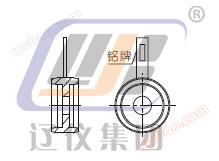
Single board structure with sealing line (see Figure 1) When β>0.67, not greater than ± 0.001
|
(Figure 1) Single board flow restriction orifice plate with sealed sealing line
(Figure 2) Circular interface
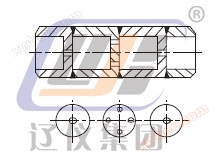
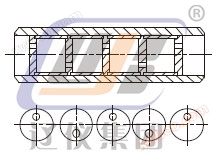
(Figure 3a) Pipeline welded multi plate flow restriction orifice plate
(Figure 3b) Pipeline welded multi plate flow restriction orifice plate
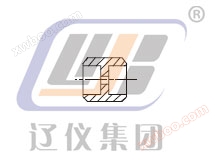
(Figure 3c) Pipeline welded single plate flow restriction orifice plate |
|

Online inquiry
-
Contacts
-
Company
-
Telephone
-
Email
-
WeChat
-
Verification Code
-
Message Content
-